Remote Pilot
Training in Schools
Year 10 to 12 students can earn a Certificate III in Aviation (Remote Pilot) and their CASA Remote Pilot Licence while still at school.
- Open to
- Domestic Students
- Location
- Queensland
- Duration
- 6/12/18 month programs available
- Study mode
- On school campus
Enrolment Information
If you are a Queensland school interested in this program for your Year 10, 11 and 12 students, please contact us to discuss the program further or enrol now.
- Email: [email protected]
- Phone: +61 7 3860 0900
NOTE: All school partnerships under the VETiS program are required to have a Third Party agreement before the program can be commenced.
The course provides these qualifications and licences:
- Certificate III in Aviation (Remote Pilot) AVI30419
- CASA Remote Pilot Licence (RePL)*
- CASA Aeronautical Radio Operators Certificate (AROC)**
* Subject to Civil Aviation Safety Authority (CASA) approval
** This is a CASA requirement to use aviation VHF radios, which are needed when flying near aerodromes and helipads. Subject to Civil Aviation Safety Authority (CASA) approval.
If you are a student wanting to enrol in this program, speak with your School VET Coordinator for further information, or apply via TAFE QLD – Pathways.
For general enquiries:
- Email: [email protected]
- Phone: +61 7 3860 0900
The course provides these qualifications and licences:
- Certificate III in Aviation (Remote Pilot) AVI30419
- CASA Remote Pilot Licence (RePL)*
- CASA Aeronautical Radio Operators Certificate (AROC)**
* Subject to Civil Aviation Safety Authority (CASA) approval
** This is a CASA requirement to use aviation VHF radios, which are needed when flying near aerodromes and helipads. Subject to Civil Aviation Safety Authority (CASA) approval.
Career paths and opportunities
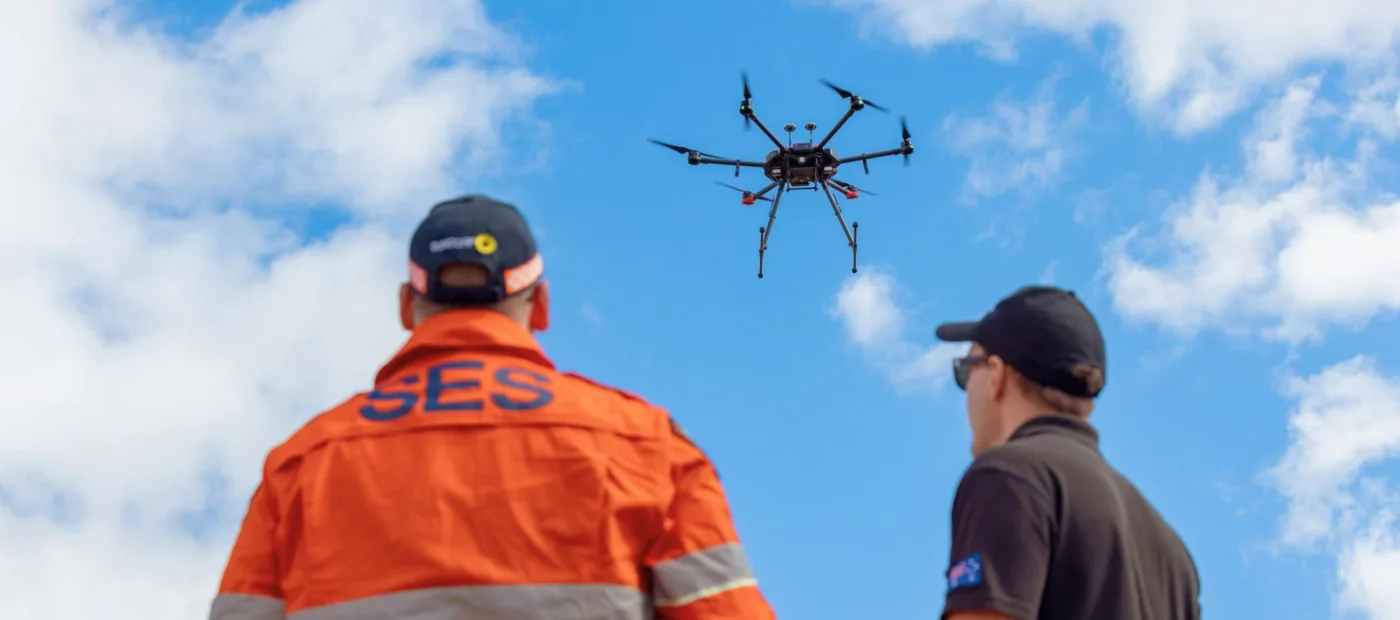
The drone industry is still quite new but rapidly evolving.
Thanks to ongoing technological advances, drones are finding their way into many industries such as Oil & Gas, Construction and Mining. These industries are using drones for services such as:
- Inspection
- Monitoring
- Filming
- Design & Engineering
- Asset Inspection
- Aerial mapping
- Agriculture
- Disaster management
- Commercial photography
Unmanned aircraft will continue to replace manned aircraft for many tasks due to their efficiency and reduced operating expenses; the opportunities are endless in this exciting industry.
Frequently asked questions
What is the Certificate III in Aviation (Remote Pilot) AVI30419?
This course has been developed in partnership with Remote Aviation Australia and designed in line with the competencies developed by the Industry Skills Council. It is the highest qualification available for those wishing to enter the unmanned industry and begin operating drones for business purposes.
In addition to the Certificate III in Aviation (Remote Pilot) vocational qualification, course participants will graduate with Civil Aviation Safety Authority (CASA) industry licences – the Remote Pilot Licence (RePL) and Aeronautical Radio Operator’s Certificate (AROC).
What is the advantage of the Certificate Ill training?
This training provides extra flying that places the student in a number of workplace scenarios that go far beyond normal RePL training.
These scenarios will allow students to experience real-life job tasks under the guidance of our experienced unmanned pilots. The scenarios will take the student from initial flight and risk management planning, through to flying the task, and reviewing the quality of their work after landing.
We also introduce aerial photography and mapping techniques, which isn’t covered in a normal remote pilot course. There is also a strong focus on developing our student’s non-technical skills, such as communication, teamwork, decision making and situational awareness.
What is the minimum age for an RePL?
The theoretical content is aimed at a level of knowledge and comprehension of a person that has completed year 10. The minimum age we will accept on a course is 15.
Any person aged under 18 will also require permission from a parent or guardian to attend.