Workforce Intelligence
Turning workforce intelligence into action
New technologies, changing workforce demographics, skills shortages and evolving regulatory requirements are reshaping the people and capabilities aviation organisations will need.
Aviation Australia’s Workforce Intelligence Tool brings together workforce research, industry insight and our aviation training expertise to support conversations about future workforce capability.
Looking ahead to 2040
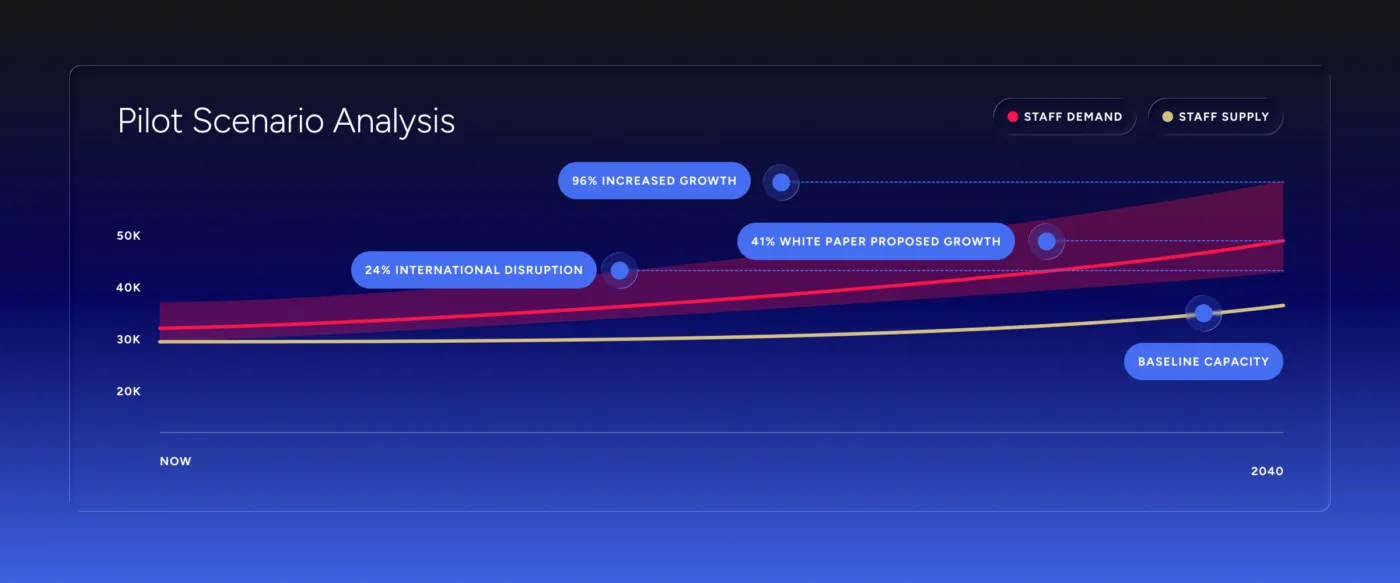
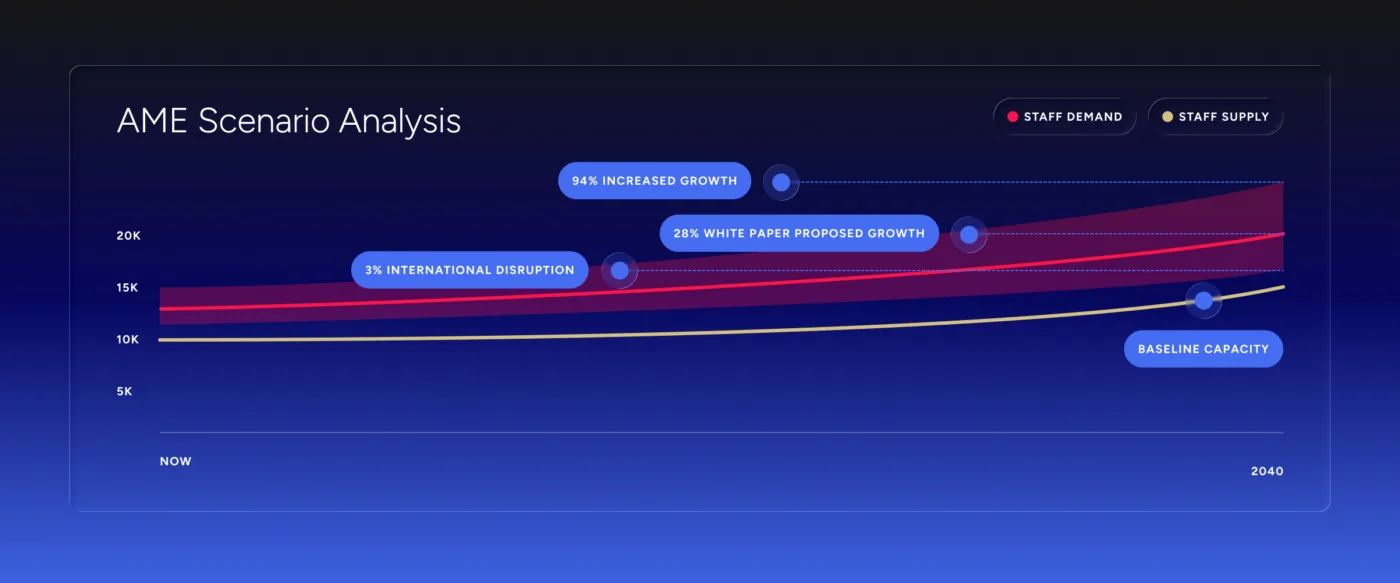
In 2024, Aviation Australia commissioned KPMG to examine the key drivers expected to influence aviation through to 2040.
The work considered four potential scenarios for how the industry could evolve and the implications for five critical aviation professions:
- Pilots
- Remote pilots
- Aircraft Maintenance Engineers (AMEs)
- Licensed Aircraft Maintenance Engineers (LAMEs)
- Cabin crew
The research provides a foundation for exploring potential workforce risks, opportunities and solutions with industry.
Aviation Workforce passing retiring age in the next decade
Pilot – Fixed Wing
17%
Helicopter Pilot
13%
Aircraft Maintenance Engineers
17%
Air Transportation Professionals
18%
Aircraft Maintenance Workforce passing retiring age in the next decade
Aircraft Maintenance Engineers (Mechanical)
17%
Aircraft Maintenance Engineers (Avionics)
10%
Aircraft Maintenance Engineers (Structures)
22%
Workforce intelligence is most valuable when it leads to action.
By combining research with feedback from employers, regulators and industry partners, Aviation Australia can identify emerging workforce challenges and help develop training and pathway solutions that respond to them.
Engineering workforce and modular licensing

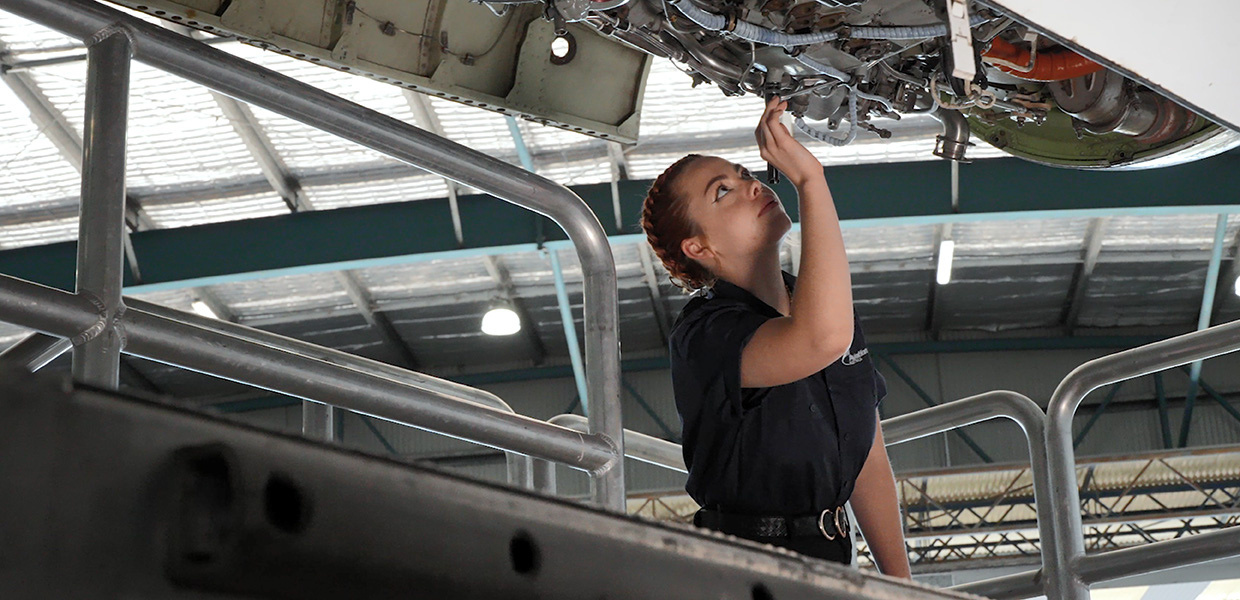
The aviation industry faces a significant challenge in replacing experienced technical professionals. In 2024, Aviation Australia highlighted workforce intelligence indicating that more than 2,000 aircraft maintenance engineers could leave the industry, representing approximately 60,000 years of accumulated experience.
Modular licensing is one practical response to industry need. CASA’s modular Part 66 pathway allows engineers to achieve an initial licence with exclusions sooner and progressively expand its scope as further experience and, where required, examinations are completed.
Aviation Australia currently offers modular pathways across B1.1, B1.2, B1.3, B1.4 and B2 categories.
The future of drones and autonomous aviation
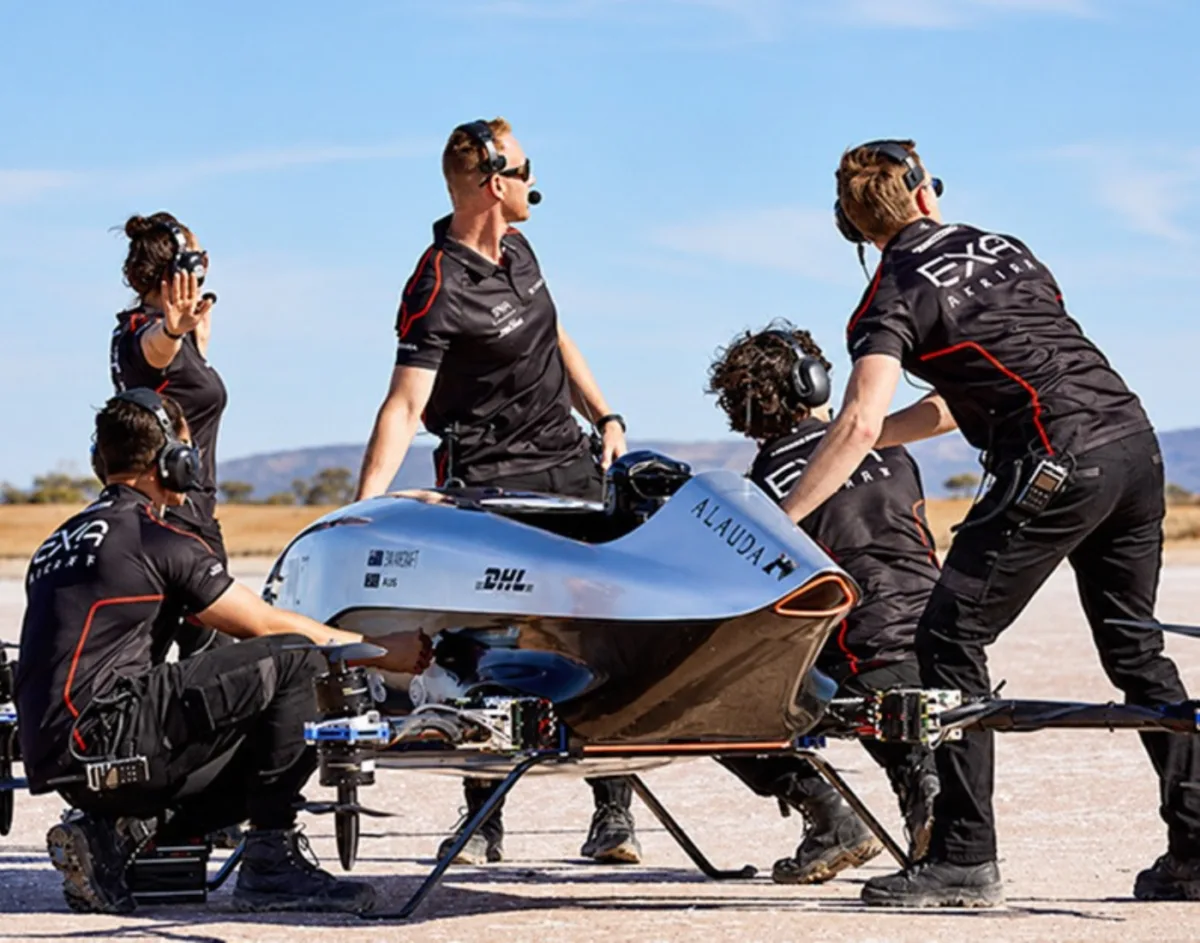
Advanced air mobility, drones and autonomous technologies will create very different workforce requirements.
Analysis commissioned by Airservices Australia projects annual drone activity in Australia increasing from 1.5 million flights in 2023 to 60.4 million by 2043¹.
The workforce implications extend beyond remote pilots to maintenance specialists, systems operators, instructors, software and autonomy specialists and safety professionals.
This creates an opportunity for aviation, education and industry to start building the skills pipeline before workforce demand becomes a bottleneck.
Aviation Australia CEO Glenn Ryan recently spoke with Global Drone Show about the skills shortage facing Australia’s aviation industry. Read the full article
¹Airservices Australia charts course for 60 million drone flights by 2043
 Featured
Aircraft Maintenance Engineering
What can the Workforce Intelligence Tool help you explore?
The Workforce Intelligence Tool can support discussions around:
Workforce risk
Where are workforce shortages, retirements or experience loss creating future risk?
Skills demand
What skills and roles could your organisation need as technology and operations evolve?
Talent pipelines
Where will future employees come from and how early should industry engage?
Training pathways
Could apprenticeships, modular licensing, upskilling or alternative pathways address capability gaps?
Emerging technology
How could remote operations, autonomous systems, electrification and new aviation technologies change workforce requirements?
Workforce planning
How might different industry scenarios affect the scale and type of capability your organisation needs?