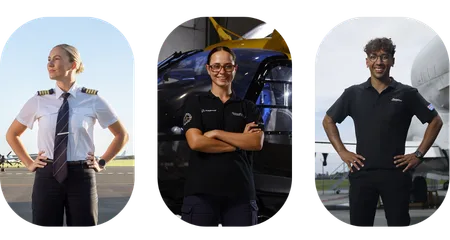
Celebrating 25 Years – Beyond the Aircraft
Look beyond the flight deck, cabin and hangar and aviation starts appearing in some unexpected places. From drone shows in the night sky to autonomous vehicles beneath the ocean, the skills that keep aircraft operating are finding new applications. We meet the people taking aviation expertise somewhere unexpected.

When hundreds of drones rise into the night sky and begin moving in perfect formation, most people see entertainment.
Sue Osborn sees an aviation operation.
As Program Manager for Nova Sky Stories Asia Pacific, Osborn manages and authorises drone light shows across the region, navigating regulatory approvals and taking on the role of Pilot in Command when a show begins.
“Contrary to popular belief, there are not 600 pilots operating 600 drones,” she says.
There is, however, an extraordinary team behind them.
Engineers, programmers, software and hardware specialists, logistics and project managers, aviation regulatory experts and creative designers can all play a part. By Osborn’s estimate, 99 per cent of the work happens before an audience sees a single drone leave the ground.
It is a vivid example of just how far aviation can extend beyond the roles and environments we traditionally associate with it.
Sue-anne Munckton, CEO and Founder of the Civil Aviation Academy Australasia and Co-Founder and Director of Sky Careers, sees that breadth across the industry.
“Aviation cannot operate without skilled, capable people, and it needs far more than just pilots and engineers,” she says.
Careers span operations, safety, airports, air traffic management, emergency services, technology, business and logistics. At the same time, skills developed within aviation are proving valuable well beyond the aircraft itself.
Gabriela Wallace knows that firsthand.
Wallace graduated from Aviation Australia in 2020 with a Certificate IV in Aeroskills – Mechanical (Structures), before building a career maintaining helicopters across defence and civil aviation.
As a B1.3 Licensed Aircraft Maintenance Engineer, she worked on Bell 412 helicopters supporting aerial firefighting operations. It was highly technical work where safety, precision and the ability to solve problems mattered every day.
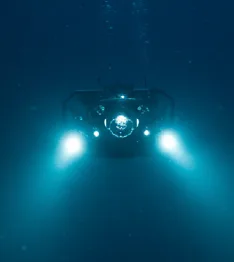
Today, the machines Wallace works on don’t fly at all.
She has moved into autonomous underwater vehicles, working across production and field maintenance.
“The platform is very different but the underlying principles are surprisingly familiar in regards to mechanical systems, fault-finding, quality, safety and working to a high technical standard,” she says.
It is a career move Wallace could hardly have imagined when she began studying aircraft maintenance.
And hers is far from the only aviation skillset turning up somewhere unexpected.
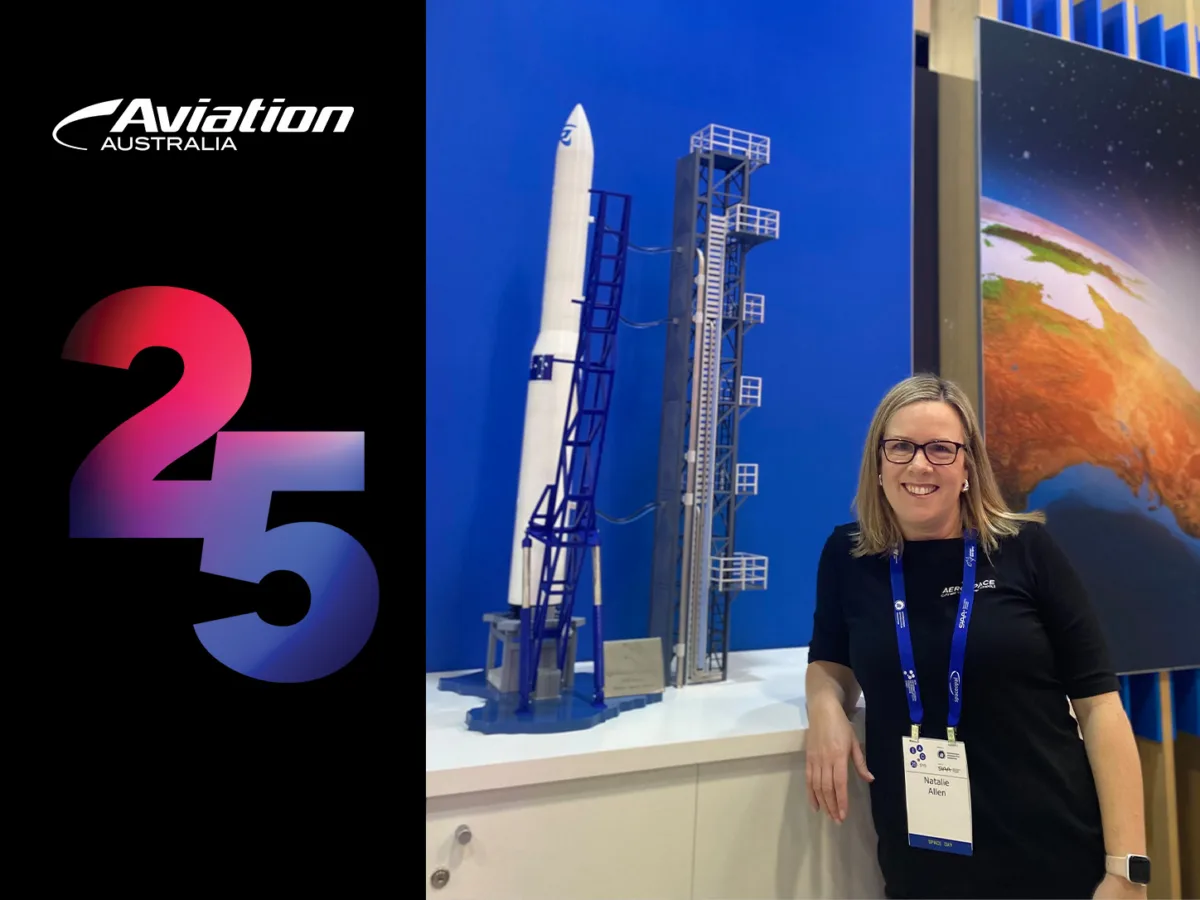
As Natalie Allen has witnessed time and time again, a career in aviation can lead you anywhere – even Space Camp.
Beginning her career as a Reservations Agent with Scandinavian Airlines before moving into roles at Virgin Australia and Boeing Australia, Allen gained invaluable experience in both operational and corporate environments. These early career experiences highlighted the vast range of pathways available across the aviation industry, well beyond the airport terminal.
Now, as Project Manager at Aerospace Gateway to Industry Schools Program, her work directly supports Queensland’s rapidly developing aerospace industry, connecting young people with career opportunities across the aerospace sector.
In 2023, this took her to Huntsville, Alabama, the home of the U.S. Space & Rocket Center.
Accompanying students and teachers from the Aerospace Gateway to Industry Schools Program, participants heard from astronauts who had completed multiple space missions and explored emerging space technologies, giving aspiring aviation professionals a firsthand look into this innovative sector.
“The experience reinforced just how important it is to create engaging pathways that help young people see themselves in future aerospace careers and understand the exciting opportunities available to them,” Allen says.
For Allen, the greatest reward is helping the next generation discover fulfilling careers they may never have known were possible. In many ways, it echoes her own journey.
“When I first entered aviation, I never imagined I would be working alongside leading aerospace organisations and participating in conversations about space exploration, advanced air mobility and emerging technologies,” she reflects.
“It’s been fascinating to see how closely aviation and aerospace are connected and to play a small part in preparing students for careers that are only just beginning to emerge.”
Together, the four stories reveal an industry whose influence reaches considerably further than the aircraft we see overhead.
As Munckton tells aspiring aviation professionals: “You don’t need to have dreamed of being a pilot from the age of five to have a successful and rewarding career in this industry.”